How to measure your screen?
SALGAR SCREEN
Has knowing the exact measurements of the screen you need always been difficult for you?
We explain all the aspects that you must take into account to be able to measure and choose your screen correctly.
Always make sure to measure twice
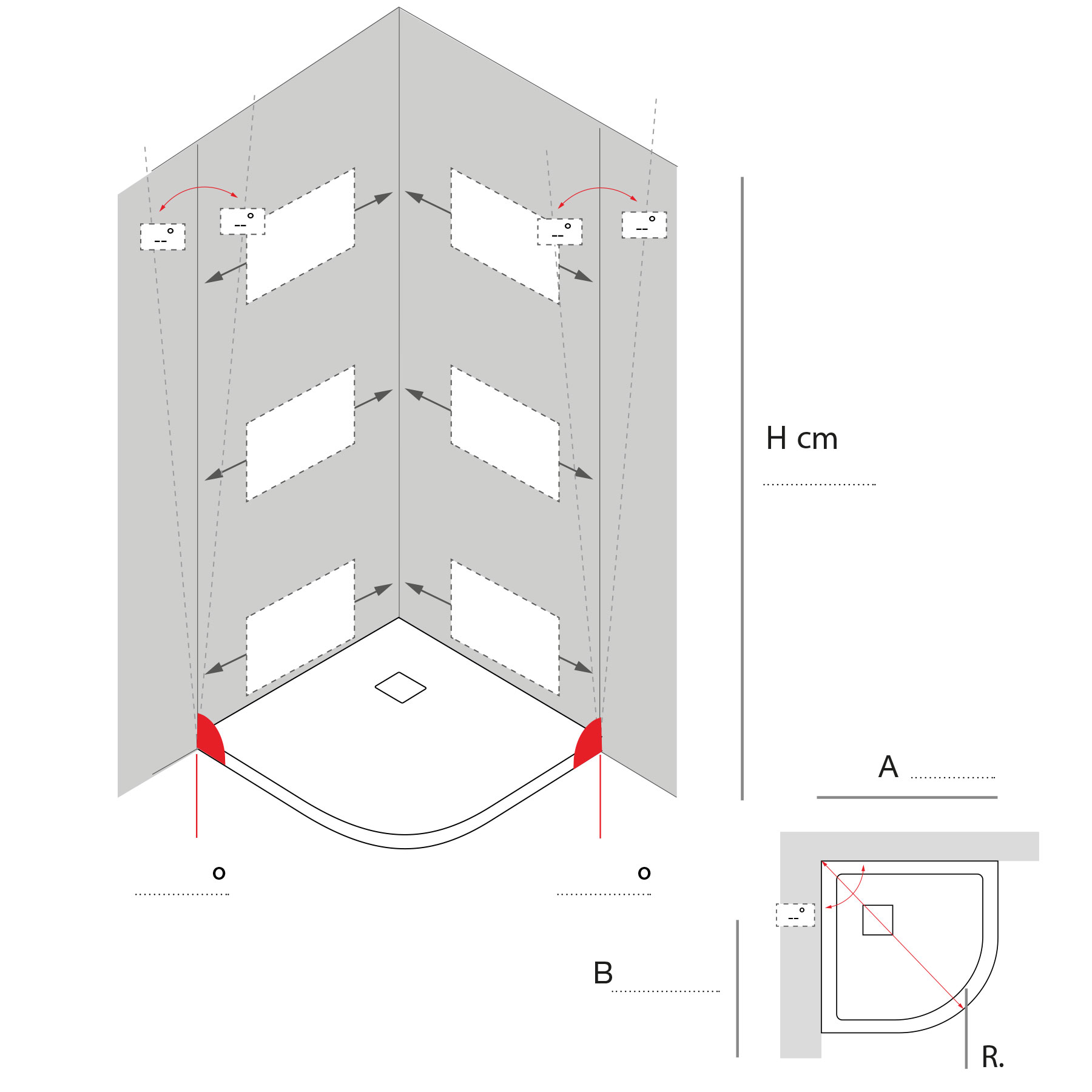
- For frontal installations, we must always measure the highest point (A), the middle point (M) and the lowest point (B).
- Of the three measures that we take A / M / B, we will keep the smallest as a reference and we will compensate the largest measure with the compensation profile.
- Check if the 3 measurements are within the range of a Salgar screen reference. Ex: Helsinki 22452, 136-140cm. Ideally, deduct 0.5cm from the lowest measurement and check if they are within the range.
- In the event that one of them is not in the range, it is always the highest average that compensates through compensating profiles.
- Ex: A is 139, M is 138.5 and B is 138cm. We discount 0.5 to B and see that the maximum difference is 137.5 to 139cm, a total of 1.5cm, which is in the range of the code and that the bulkhead compensation, 2cm per side, covers the mismatch.

- Dish on ground or on-site / flush with the ground?

- In any case, the two sides are measured from the wall to the edge of the plate.
- In the cases of plate on floor, the screen is always somewhat smaller than the total dimension of the plate. Ex: Helsinki, cod. 22465, nominal plate dimensions 700x900, screen measures 675-695 and 875-895 mm.
In the case of work surfaces or at ground level, the screen, for aesthetics alone, must fall into the joint of the plate and the floor. We must measure the two measurements up to those joints and see if the screen adjusts to them.
Check in addition to the measurements:
- Radio Roca or Italian.
- If any side of the shower is recessed or oversized
- Dish on the ground or on site / flush with the ground.